
Insights • Product & Strategy
Designing Calm Interfaces in a Noisy Product World
A practical framework for building focused, high-clarity experiences that respect your users’ attention — without sacrificing growth or experimentation velocity.
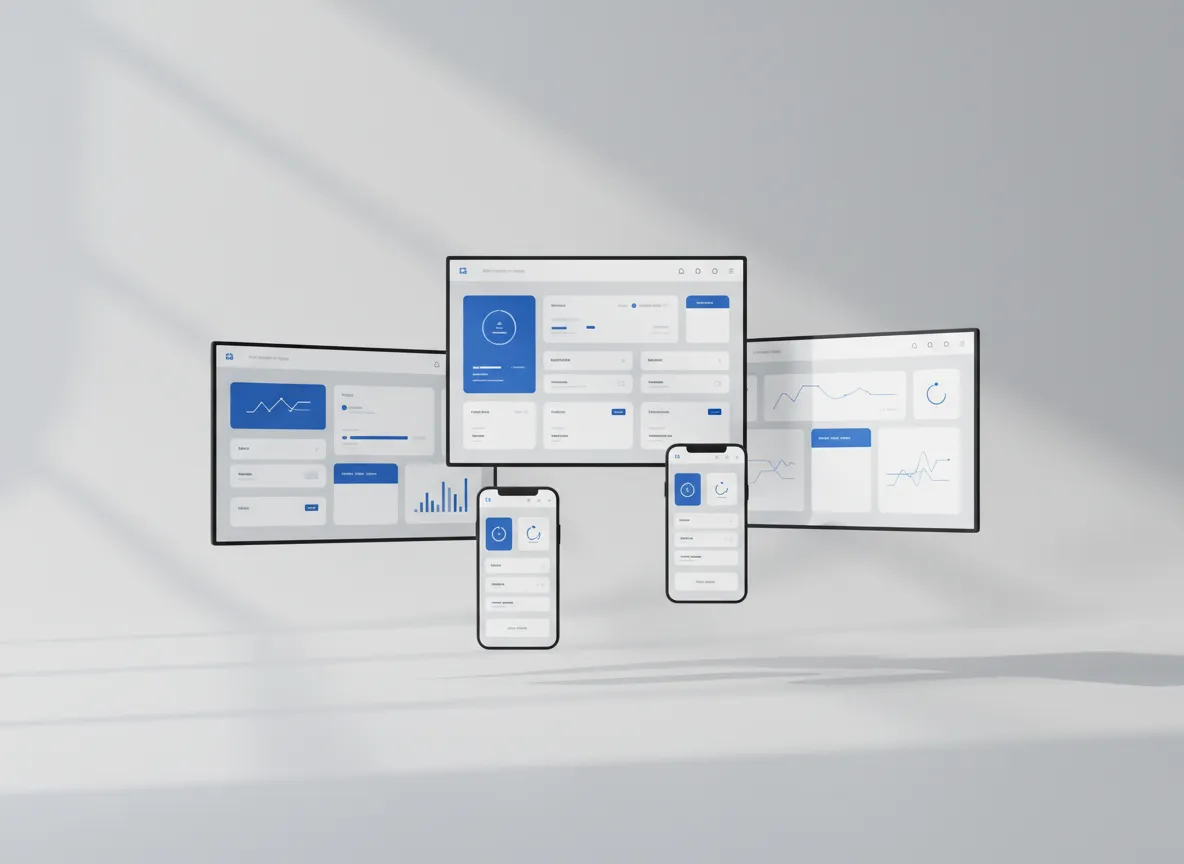
Most products don’t fail because they lack features. They fail because the experience collapses under the weight of competing priorities, growth experiments, and a constant stream of quick wins. The result is a noisy interface that quietly erodes user trust.
Calm interfaces are not about being minimal for the sake of aesthetics. They are about removing accidental complexity so the essential actions and signals can rise to the surface. In this article, we’ll walk through a practical lens you can use with your own team to move toward calmer, more trustworthy experiences.
A simple lens: signal, support, noise
When we audit a screen, we classify every element into one of three buckets:
- Signal: the single most important action or insight this screen exists to deliver.
- Support: elements that reduce friction in reaching or understanding the signal.
- Noise: everything else that competes for attention without meaningfully helping.
Calm interfaces ruthlessly protect the signal, thoughtfully design the support, and aggressively trim the noise. That might sound obvious in theory — in practice, it requires a shared vocabulary across design, product, and growth so the right tradeoffs can be made on purpose.
“Every additional highlight dilutes the meaning of highlight.” When everything is urgent, nothing is. When every corner of the interface is animated, elevated, and brightly colored, users learn to ignore all of it.
Patterns for creating calm by default
Across teams, we’ve seen a handful of patterns consistently reduce noise while improving activation and retention. You don’t need to adopt all of them at once; instead, treat them as lenses you can apply to your most important flows:
- Default to one primary action per screen and visually demote all secondary actions.
- Group related decisions so users don’t have to mentally jump between contexts.
- Use progressive disclosure to hide advanced options until they are relevant.
- Reserve motion for state change and feedback, not decoration.
- Design for endings: show users what just happened and what happens next.
Pick one high-impact flow — onboarding, upgrade, or your core activation path — and run a signal/support/noise audit with your team. You’ll almost always find at least one entire cluster of UI that can be safely removed or demoted without hurting the business. Often, it improves your key metrics.
If you’d like a worksheet version of the signal/support/noise audit to run with your own team, you can download a simple template and facilitation guide below.
On this page
- Why calm interfaces matter
- Signal, support, noise
- Patterns for calmer flows
- How to run your own audit
Get new essays in your inbox
A short, practical email every other week on product, design, and strategy.
About the author
Alex Rivera leads product design at early-stage SaaS teams, helping them ship opinionated, high-clarity experiences without slowing down experimentation. Over the past decade, Alex has partnered with YC-backed startups and growth-stage companies to align product, design, and go-to-market around a shared narrative.
Related articles
More essays on building calm, confident product experiences.
Product Strategy
Design guardrails that unlock faster shipping
How to use lightweight principles and component constraints to move quickly without accumulating UX debt.
Read article →
Metrics
Measuring the impact of UX decisions beyond clicks
How to connect seemingly small design choices to activation, expansion, and retention curves.
Read article →
Stay ahead of the product noise
One thoughtful email every other week on product clarity, interface calm, and the strategy behind both.
No spam, no growth hacks — just frameworks, real examples, and questions to take back to your team.